The Address You Borrow: Commissary Agreements and the Fragility of Food Truck Permits
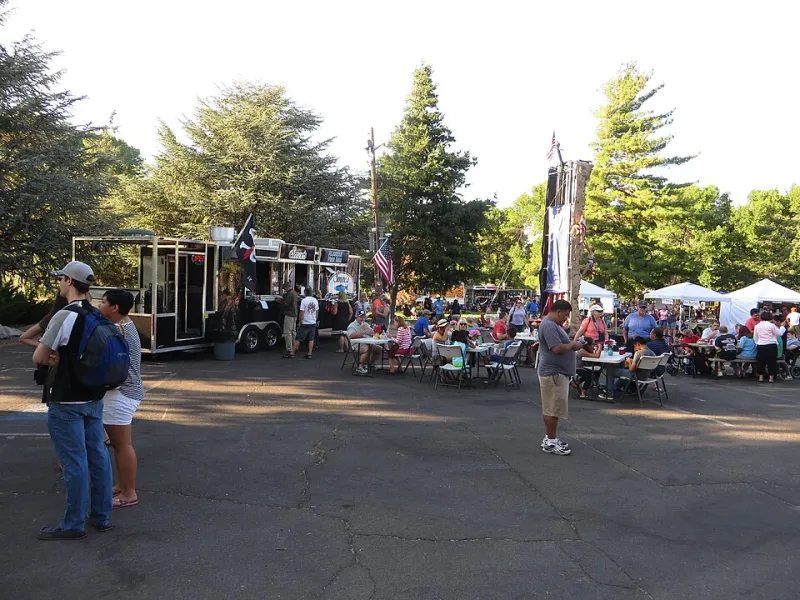
Photo: Ken Lund, CC BY-SA 2.0, via Wikimedia Commons
Ask a food truck owner where the business is located and the answer is usually a cross street. Ask the health department the same question and the answer is a fixed address the owner does not own, rent an apartment at, or necessarily visit more than once a day.
That address is the commissary: the licensed kitchen, warehouse, or base of operations that mobile food units are required to operate from in most U.S. jurisdictions. It is one of the few permit dependencies in small business regulation where the failure of a third party's compliance directly voids the vendor's approval.
What a commissary is expected to provide
Health codes vary, but the core functions are consistent. A commissary typically must supply potable water for filling; an approved point for discharging wastewater; warewashing for utensils and equipment; food storage; vehicle cleaning and servicing; and, in many places, a documented schedule of when each unit reports. Some jurisdictions require overnight parking at the commissary; others require a minimum number of visits per week.
Critically, the commissary itself must hold a valid food establishment permit and be inspected. A vendor's approval rests on a facility that must independently remain in good standing — which is why the dependency is so easily broken and so rarely examined.
The permits that reference the borrowed address
The commissary address is not a formality on one application. It propagates:
- Health. The mobile food unit permit names the commissary, and the operating plan describes the schedule and services used there.
- Fire and safety. Propane storage, extinguisher service, and hood systems are reviewed, and some jurisdictions tie inspection scheduling to the base of operations.
- Business licensing. The general business license lists an address for the entity; vendors frequently confuse this with the commissary designation, and inspectors do not.
- Vending and parking. Municipal or county rules determine where a truck may stand, for how long, and at what distance from a restaurant or a residential property line. These permits are usually separate from the health permit and can lapse independently.
A change in the commissary generally requires an amendment to the health permit, and in some jurisdictions a new plan review — with the truck unavailable for service during the review window.
When the arrangement changes
Several scenarios, all common:
The commissary closes or loses its own permit. Vendors discover this during a routine inspection, when the inspector cannot verify the base of operations.
The lease or agreement ends. A handshake arrangement with a restaurant kitchen does not survive a change of ownership at the restaurant.
The services were never actually provided. Some arrangements are nominal: a vendor pays a monthly fee and receives an address. When an inspector asks for water fill logs, waste discharge records, or warewashing evidence, the file is empty, and the vendor's permit is exposed.
The venue is redeveloped or rezoned. A commissary that becomes a permitted use issue for its own landlord takes the dependent vendors down with it.
The schedule is not documented. Many jurisdictions require a written agreement plus a reporting schedule. Absent paperwork, the vendor holds a permit with no verifiable basis.
Vendor checklist
- Obtain a written commissary agreement that names the services provided, the hours of access, and the reporting frequency.
- Confirm the commissary's food establishment permit is active, and re-verify at each renewal.
- Keep records: water fill and discharge logs, cleaning records, and a copy of the agreement in the vehicle.
- Confirm what happens if the commissary closes, in writing — notice period, refund, and assistance with a replacement letter.
- Carry the current permit, commissary address, and vehicle identification in the truck at all times.
- Budget for the amendment process, not just the original application: fees, potential re-review, and downtime.
Commissary and landlord checklist
- Maintain your own food establishment permit and inspection status; your tenants' approvals depend on it.
- Provide documentation that supports the vendor's operating plan, and respond to inspector inquiries promptly.
- Confirm that the commissary use is permitted under the property's zoning and lease — a sublease to a food truck base can conflict with an existing use restriction.
- Address parking, generator use, and overnight storage in the agreement, and check whether the landlord's own lease permits those activities.
Event organizer checklist
- Collect each vendor's health permit, business license, and commissary designation before confirming the lineup.
- Ask for the certificate of insurance naming the event as additional insured, and verify the vehicle matches the permit.
- Confirm temporary event permits, fire access, and generator placement with the local authority; a valid vendor permit does not authorize the event itself.
- Document which vendors are operating under a temporary event waiver rather than a standing permit, since the two carry different requirements.
The renewal to build around
Treat the commissary agreement as a permit document with its own expiration. Put its end date, the commissary's permit renewal date, and your own health permit renewal on the same tracking sheet, and review all three together. A borrowed address is fine as a business arrangement. It is only safe when someone is watching the date.
This article provides general information about U.S. mobile food permitting and is not legal advice. Requirements vary by state, county, and municipality.